
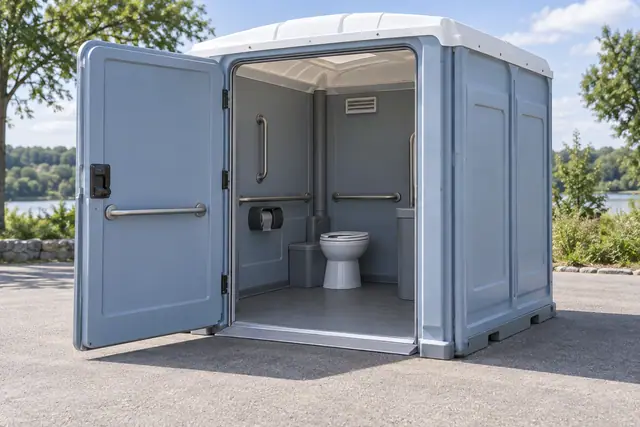
Ask about features without requesting medical details
Explain practical requirements such as an easier entrance, maneuvering space or usable controls. A customer can describe an access need without supplying a diagnosis, a guest’s medical history or personal identifying information. Ask the provider for accurate model information that the organiser can use when discussing suitability. The equipment enquiry should focus on function and the site rather than assumptions about a person’s abilities.
Make the facility identifiable within the whole setup
An access-focused unit should be findable from the occupied area, not hidden behind ordinary cabins or reached only through a staff enclosure. Review the proposed route, door opening and any necessary washing provision together. Keep signage simple and consistent with the actual arrangement. Do not advertise a detailed feature before it is confirmed on the accepted equipment.
Preserve access during busy use
Discuss where people may wait and where supplies or event furniture will stand so they do not narrow the approach or obstruct the entrance. A well-intended sign, queue rope or storage box can make an otherwise usable setup awkward. Ask the responsible organiser to keep that space clear and report a functional problem through the provider rather than modifying controls, supports or the door.
Confirm the complete arrangement
Include the intended users, duration, property and required functions in the enquiry. Ask what equipment, washing and ongoing care are proposed, and have responsible parties review applicable access requirements. Choosing an accessible category does not by itself certify the entire event or property. The useful result is a clearly described facility and a practical route that remain available during use.
Questions before you book
Do I need to send a guest’s medical information to ask about access?
No. Describe the functional features and site conditions that need review, without unnecessary personal or medical details.